

Publish Your Research Ideas!
Publish Your Research Ideas!
From an idea to a published, indexed, citable paper.
KhojByte Research Lab is Nepal's research publication and innovation studio — helping students, scholars and institutions transform raw ideas into rigorously reviewed, ethically grounded, globally presentable research.
Your research career — as a level map.
Each checkpoint is a real KhojByte course. Beat the levels in order, or jump in at your stage. Boss level publishes you in a Q1 journal.
- LVL 01 · BeginnerFoundations of Academic Research WritingUNLOCK
- 02LVL 02 · BeginnerUndergraduate Project JourneyPLAY
- 03LVL 03 · IntermediateUnderstanding Thesis RequirementsPLAY
- LVL 04 · IntermediateAI Tools for Researchers (Ethical Use)UNLOCK
- BOSS · IntermediateQuantitative Methods with PythonUNLOCK
8 domains. Dozens of open problems.
Explore the research we actively develop and support. Click any domain to drill down — Domain → Subdomain → Specific area — then jump straight to papers, ideas and open problems in that thread.
A research operating system,
not just another consultancy.
Submit an idea, get a feasibility read, match with a domain mentor, track every publication stage in real time, browse Q1-targeted journals with quartile data, run ethical plagiarism checks, and showcase your portfolio — all in one workspace.
Eight services that move
ideas to publication.
Learn how to publish a research paper —
from your first abstract to acceptance.
Self-paced cohorts on academic writing, methodology, journal targeting, ethical AI usage, statistics & data viz, and survival skills for graduate research. Interactive lessons, quizzes, assignments and threaded peer discussions — built by senior researchers.
A live dashboard for every
stage of publication.
From the moment you submit your idea to the day your paper is published — every checkpoint is visible, auditable and time-stamped.
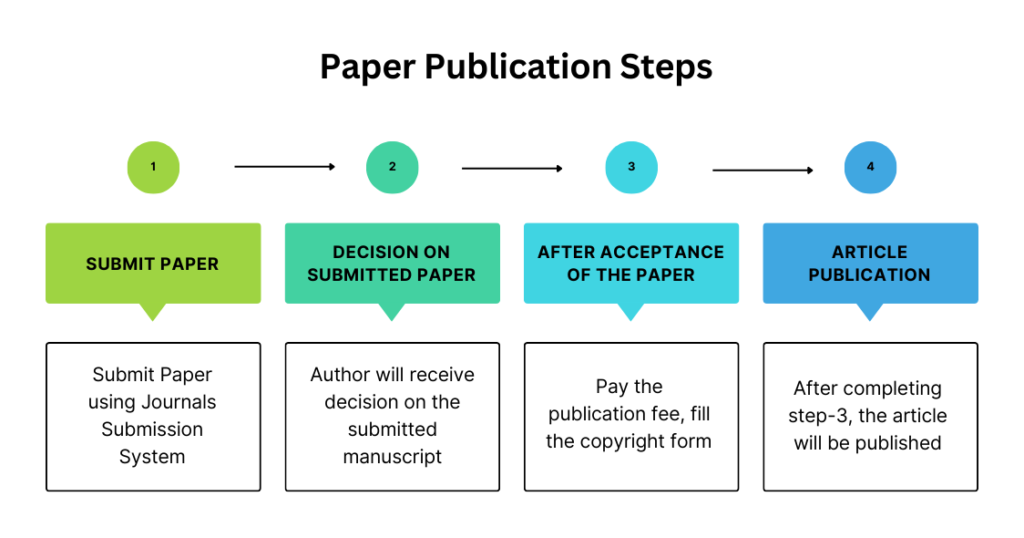
See your timelineFrom a class project to a published paper.
A five-step conversion: learn the craft inside our LMS, then route the very same project through our mentor-led publication workflow. One ecosystem, no hand-offs.
Built for the precision of modern research.
Looking for a research direction?
KhojByte mentors curated these high-impact, ready-to-execute research ideas across domains — perfect for thesis projects, papers, and grant proposals.
Low-resource Nepali instruction-tuning corpora curation
Build a reproducible pipeline that converts Nepali web text + glossed parallel data into high-quality instruction-tuning pairs.
Soiling loss models for high-altitude solar plants in South Asia
Quantify monthly soiling losses at 3 Himalayan PV sites and fit a regression model using AOD + local weather covariates.
Stigma-aware chatbot interventions for adolescent depression in Nepal
Mixed-methods evaluation of a Nepali-language conversational agent that adapts disclosure prompts based on caste, gender and family stigma signals.
Battery-less LoRa sensor nodes for Himalayan crop monitoring
Design and field-test an energy-harvesting LoRa node powered solely by indoor PV + thermoelectric scavenging — targeted at year-round crop telemetry in Mustang and Manang.
Research that left the lab.
Featured papers produced and mentored through the KhojByte ecosystem — peer-reviewed and globally indexed.
Climate-Resilient Glacier Mass Balance Modelling in the Eastern Himalayas
Sentinel-2 and ICESat-2 data for high-resolution glacier mass balance modelling in Khumbu and Langtang.
Multilingual BERT for Low-Resource Nepali NLP
Benchmark for mBERT fine-tuned for Nepali with 6.8 F1 improvement on downstream tasks.
Indigenous Knowledge Systems in Climate Adaptation: A Systematic Review
Review of 184 studies surfacing indigenous-knowledge contributions to climate adaptation.